



A driver calls at 5:30 a.m. The truck won’t start, and the first delivery is due at seven. You’re working out which vehicle can cover the route while someone finds out when the truck can be repaired.
Your company may already have a fleet management company handling approvals and billing. That still leaves a very practical question for your branch: who knows this truck, can get it serviced, and is following up on the maintenance it needs?
What fleet management covers
Fleet management covers the broader vehicle operation, including purchasing and replacement decisions, fuel, driver assignments, budgets, and compliance. Your company might handle those responsibilities internally or use outside providers for some of them.
On the maintenance side, a fleet management company, or FMC, may send service reminders, review repair estimates, authorize spending, consolidate invoices, and report costs to leadership. Those services can be valuable when a business has vehicles spread across several branches.
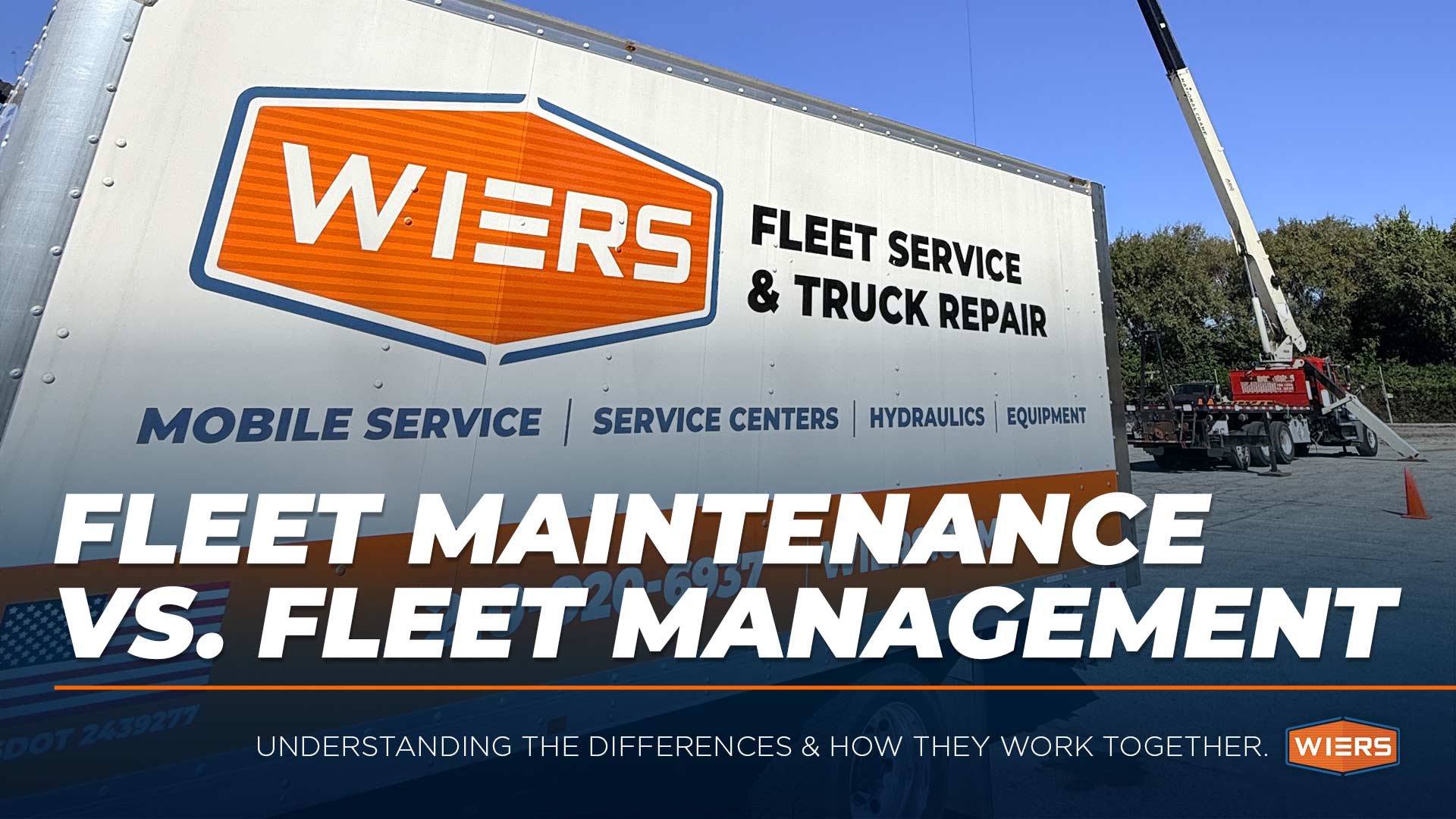
Fleet maintenance is the inspection, preventive service, diagnostics, and repair work performed on the vehicles. A truck still needs a technician to inspect it and do the work, even when an FMC coordinates the process.
A service reminder still needs someone to follow through
Think about the last truck your branch sent in for service. Who arranged the appointment? Did the shop know its history? When the inspection found something that could wait, who made sure it was handled later?
A maintenance reminder is useful. Turning it into completed work takes coordination around your drivers, routes, and available vehicles. An inspection report also needs follow-through so a repair identified today doesn’t get forgotten until the truck is down.
Technicians who see your units regularly can build on previous inspections and repairs. A consistent maintenance relationship also gives you a service contact who understands your schedule, and records you can use when deciding what to repair or replace.
You can use an FMC and a maintenance partner together
If corporate already uses an FMC, improving service at your branch may be possible within that arrangement. An FMC can continue handling its approval, billing, and reporting responsibilities while a maintenance partner performs the work.
Wiers works alongside fleet management companies. Depending on your company’s agreement, you may have a choice of service provider. Confirm the provider requirements and authorization process before changing shops so everyone understands how the work will be approved and billed.
Ask whether your current setup gives your branch reliable scheduling, technicians familiar with your equipment, and access to each unit’s service history. Those are practical needs to discuss with both providers.
Check coverage for the truck and the equipment on it
Your lease matters, too. If your company owns its trucks or uses a finance lease, it generally needs to arrange maintenance separately. A full-service lease bundles the vehicle with maintenance services. Check what your agreement includes and where the work is performed.
That becomes particularly important with specialized equipment. A truck can drive normally and still be unable to do its job because the boom, crane, hydraulics, or truck-mounted forklift needs attention. Make sure the service arrangement covers the equipment your crews depend on as well as the chassis.
For a unit you plan to keep for ten years or longer, a provider’s familiarity with that equipment and its repair history can also inform decisions about continued repairs and eventual replacement.
How Wiers supports the branch
The Fleet Partner Program gives fleets a dedicated mobile technician, planned maintenance and DOT inspections, and access to unit records through the Wiers Insight Platform. Those records include inspection findings, repair history, and invoices, giving managers information they can use at the branch.
On-site mobile service lets suitable work happen at your yard, with service centers available for work requiring shop facilities. It can also reduce the driver time and transportation costs of taking a truck to the shop.
Technical judgment matters just as much as coordination. In one Wiers Lafayette repair, another provider had recommended a $5,000 turbocharger replacement. Wiers traced the problem to a clogged crankcase filter and resolved it for $1,400. That is the kind of decision made by the team inspecting the truck, wherever approvals and billing are handled.
Start with the trucks at your branch
Look at one unit’s recent service history. Can you see what’s due next, what work was deferred, and who is responsible for getting it scheduled? Then consider whether you have the same visibility across the rest of your fleet.
If you’re spending too much time chasing appointments or piecing together repair records, bring those problems to the conversation. Talk with a Wiers representative about your vehicles, the equipment they carry, and how maintenance could work alongside the arrangements your company already has.
FAQs
What is the difference between fleet management and fleet maintenance? Fleet management runs the whole vehicle operation, from buying trucks to routing, fuel, budgets, and compliance. Fleet maintenance is the inspection, preventive service, and repair work that keeps those trucks safe, legal, and on the road.
What does a fleet management company do? A fleet management company (FMC) handles admin for your fleet. It sends maintenance alerts, approves spend, pays the shop, bills you back, and reports to leadership. A local shop or mobile provider still does the repair work.
Is a full-service truck lease the same as fleet management? No. A full-service lease bundles the truck and its maintenance for a fixed monthly fee, usually over 5 to 7 years. A fleet management company handles admin and billing but doesn’t usually supply the maintenance itself.
Can I choose my own repair shop if I use an FMC? In most setups, yes. The end user usually picks who services the truck, and the FMC processes the bill. Check your FMC agreement to confirm.
Does Wiers work with fleet management companies? Yes. Wiers works with the major FMCs every day. Fleets that use an FMC can still use Wiers for maintenance, repair, and mobile service.
Where does Wiers provide fleet maintenance? Wiers runs 14 strategically located service centers and mobile service across 40 service areas, including Indiana, Illinois, Kentucky, Michigan, Ohio, Wisconsin, Colorado, Texas, Tennessee, Georgia, South Carolina, and Florida. Headquarters is in Plymouth, Indiana.